A part of the challenge of being a writer, is to properly convey the image that you see in your head to the reader. To make them see what you see.
The exact portrayal is probably not achieveable, but close enough that they are immersed in your world and feel part of it. «Under-writing» can lead to the reader’s confusion, as the image they have created may not match what you later describe. They lose focus on your story trying to re-set their brains to a new image.
If I write: «He walked into the tavern and sat down, a server immediately setting a plate of food on the table before him.» Would that give you, as a person who has never seen the image in my head of this tavern, gain the image i have in my head? Probably not. And instead of following the storyline, your brain would spend energy on trying to create an image from scratch from your imagination.
Walking into a tavern, what does it look like? Dark, light, color of light? Low ceiling? benches or tables? Decorations? Full of people or just here and there? Sounds? Music? Servers carrying trays? Mood? Scents? You probably have all these in your head.
How about instead: «As he opened the door to the tavern, his senses were overwhelmed by the cocophany of laughter and music flooding him from the crowd inside.» «The hall was batherd in a glow of organge from lanterns hanging from the low ceiling.» «He worked his way past the crowded tables and was relieved to find an available chair at a table in the very back of the room. Slumping down in the chair and setting his pack against the leg of the table.» «As the servers buzzed in and out of the kitchen, whafts of the spices and wine followed them as they carried trays laden with food to every table.»
Making desricptive paragraphs can be exhausting if it is new to you. Generally, I tend to write the main scene, just to keep the inspiration coming, then go back to the scene at a later time to fill in the «missing» information.
This type of description does not only extend to surroundings. «The creature grabbed his arm.» Sure, but grabbing an arm is not an image in itself. the upper arm? The wrist? What kind of hand? So how about «The creature’s long spindly fingers clamped around his wrist in a vice-like grip.»
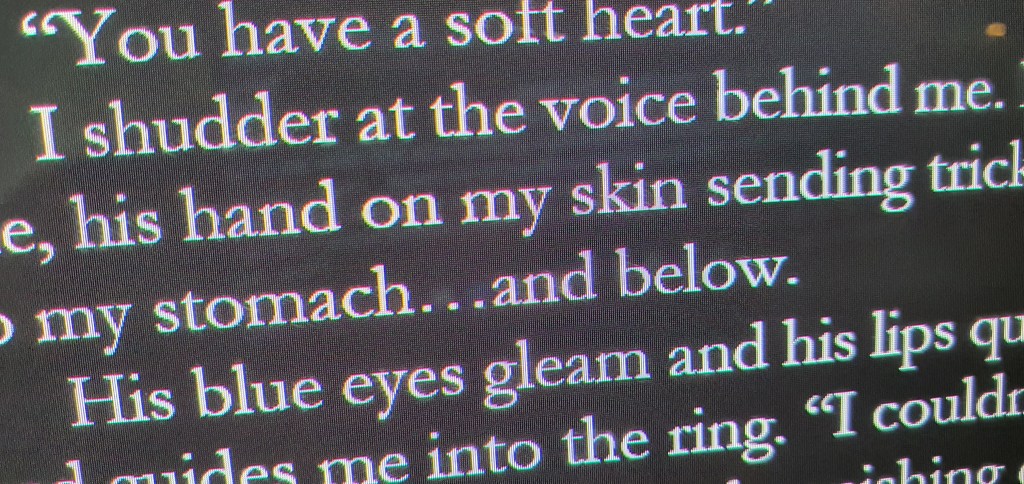
It takes practice. A LOT of practice to make descriptive tags come naturally when you write. There are lots of helpful books out there that can also help you. In particular i would advice giving Jackson Dean Chase’s phrase books a read. He has lots of good tips, and examples of sentences in different genres and settings to use as inspiration. Even if you don’t write romance, i would in particular advice checking out his «Romance writer’s phrase book», as it contains a lot of descriptions of facial and body expressions that are relevant for any genre.
Now to avoid «over-writing» 😀




 K.E Hills
Legg igjen en kommentar